
Axe Vale Riverfly
Riverfly: Freshwater Invertebrate Monitoring
The ecological status of our rivers and watercourses in the UK is well known and much has been written about the topic. Most are in poor ecological condition, due in the main to pollution from agricultural practices, sediment runoff and discharges from sewage treatment works and combined sewer overflows (CSOs).
Although the Environment Agency (EA) and Water Companies carry out water quality monitoring they do not have the resources to monitor enough locations on a waterbody to give a true picture of how it is performing for cleanliness and freedom from pollution.
Some years ago the West Country Rivers Trust began a programme to develop and introduce a relatively simple procedure that volunteers could use to monitor river water quality. The programme relied on individuals and groups measuring phosphate, dissolved solids and water temperature to give a score that indicates the overall health of the water body.
Although water quality monitoring is a vital tool for assessing pollution events, it is only part of the waterbody monitoring that volunteers can carry out. Rivers (with the exception of tidal/saline estuaries) and other waterbodies such as streams and ponds are the home of freshwater invertebrates, and riverflies are part of this group.
They, along with other freshwater invertebrates, are at the heart of the freshwater ecosystem and are a vital link in the aquatic food chain. They have common characteristics: limited mobility: living in the riverbed; relatively long life cycle from a year to two or slightly longer; presence throughout the year; and specific tolerance to changes in environmental conditions which make them useful indicators of water quality, pollution, sedimentation and low water flows.
Riverflies form the bottom end of the food chain, and their importance cannot be under-estimated as a food source for fish and other aquatic fauna, birds and many other creatures. It is perhaps not an exaggeration to say that without these invertebrates much of the animal world would cease to exist and their loss could even threaten human existence!
The Riverfly Partnership was set up many years ago to co-ordinate and provide information on all aspects of riverflies, thus recognising the importance of these creatures. The Partnership offers advice and training for 30 riverfly volunteers so that they can monitor waterbodies to a verified level of competence and ability.
What are riverflies?
Riverflies are freshwater invertebrate larvae which eventually emerge as flying insects, which are seen regularly in the air during the summer months, although some species occur throughout the year.
What riverflies do we monitor?
The Riverfly Partnership have focused on a key group of three types of riverfly as well as one non-flying invertebrate. This grouping, with subdivisions not dealt with here, gives eight types to monitor. They comprise the following: - up-wing flies or mayflies (Ephemeroptera), caddisflies or sedges (Trichoptera), stoneflies (Plecoptera) and freshwater shrimp (Gammarus).
How do we monitor and collect the riverflies/invertebrates?
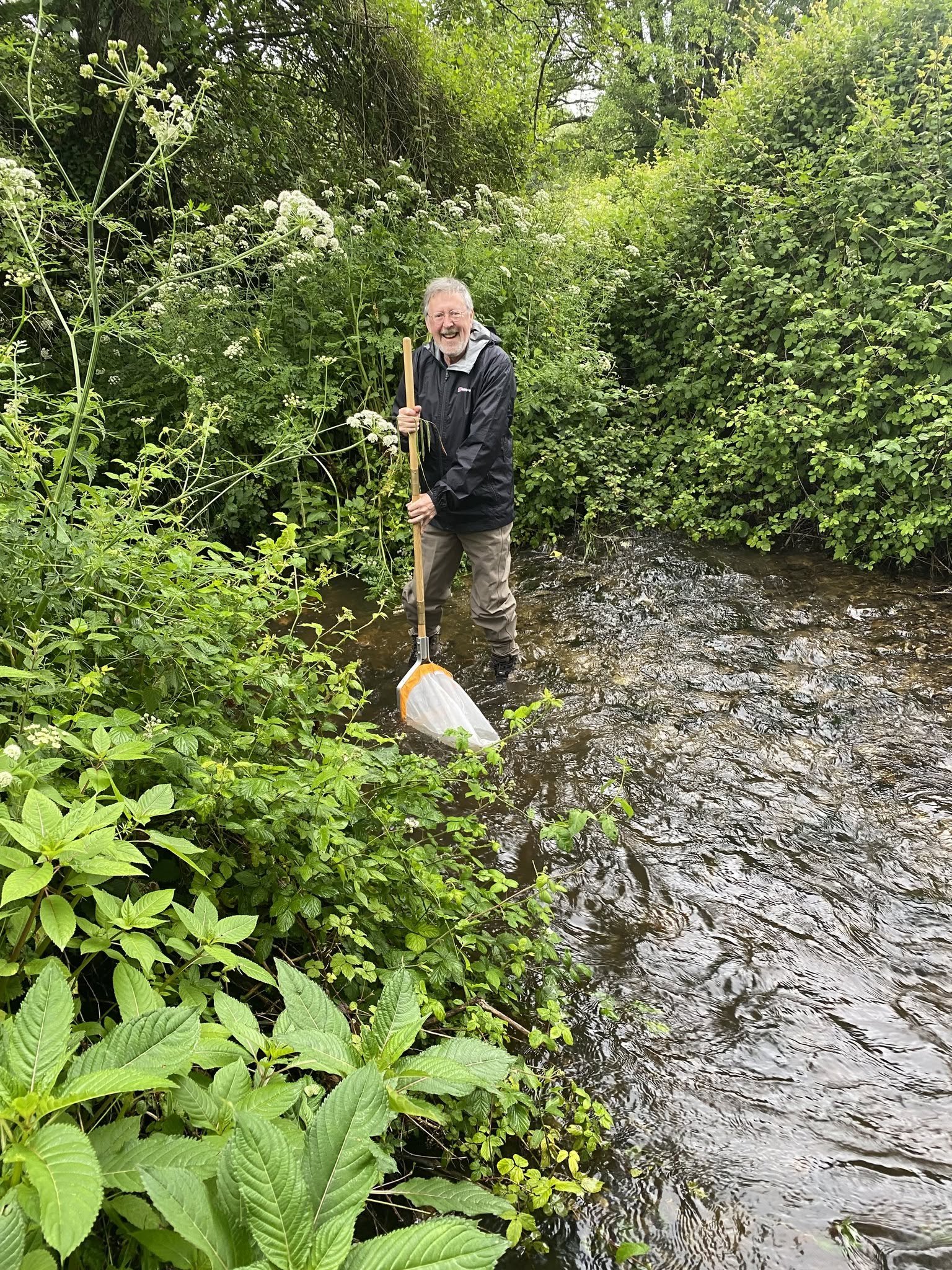
The riverfly and invertebrate samples are collected by using a technique called ‘kick sampling’. Briefly this involves agitating the upper layer of the riverbed using a kicking action with one’s foot; any invertebrates dislodged float into a net held downstream of the kick sampling area. The kick test should last approximately three minutes and cover as much of the immediate river area as possible including parts adjacent to river/waterbody edges. This sample is cleaned of as much unwanted debris as possible and then the net is emptied into a large shallow tray of water to keep the creatures alive. The riverfly monitor then examines the sample and counts and identifies the groups of invertebrates present. Only those that fall into the eight defined groups (see above) are recorded on a dedicated form.
The numbers of each group are then transferred from the form into a national database (Cartographer), which allows experts to monitor overall river health and pollution incidents. The Riverfly Partnership and the Environment Agency collaborate in assessing the data.
The interest being shown in volunteer riverfly monitoring is growing at a most encouraging rate both locally and nationally. Figures reported in The Riverfly Partnership’s recent newsletter show that numbers of monitors are on the increase. I trained twenty-five volunteers in 2024 of which eighteen monitor in the Axe catchment, four in Somerset and three in Dorset. A further eleven volunteers monitor in the Axe catchment but under a different Riverfly co-ordinator.
What should I do if I’m interested in volunteering?
If you would like to know more about volunteering or would like some further information before making up your mind, then contact your local Riverfly Tutor and Co-ordinator.
For the Axe catchment which includes the R. Axe and all its tributaries please contact Paul Spearing (paul.spearing1@btinternet.com) who will be pleased to help and advise.